
Crypto & Blockchain
How Can ViaBTC TX Accelerator Help During High Bitcoin Traffic?
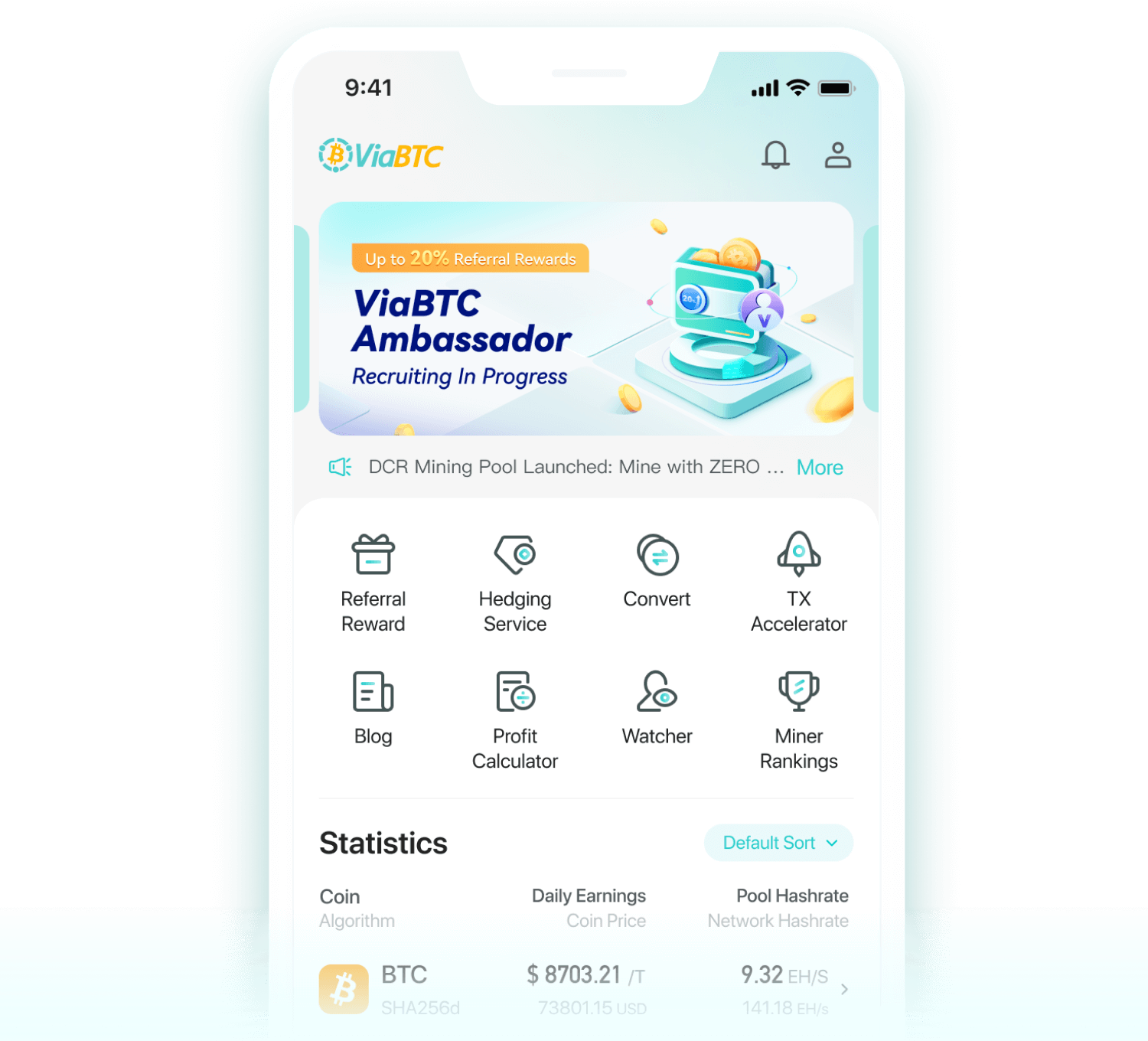
When Bitcoin traffic rises, a low-fee transaction can stay unconfirmed because miners usually prefer transactions offering more fee revenue per unit of block space. ViaBTC TX Accelerator gives users another route: submit the TXID and ask ViaBTC or participating mining pools to prioritize it. In 2024, ViaBTC documented two service levels—free and paid acceleration. Free submissions require a transaction of no more than 0.5 KB and a fee rate of at least 0.0001 BTC/KB. Acceleration changes mining priority; it does not alter Bitcoin’s protocol, block interval, or the transaction already broadcast.
Bitcoin has used proof-of-work mining since 2009, and every ordinary on-chain payment still has to compete for finite block space before receiving its first confirmation. A wallet can broadcast a valid transaction immediately, but broadcast does not reserve a place in the next block. When incoming transaction volume grows faster than blocks can clear pending data, miners have more transactions to choose from and fee rate becomes an important selection input.
That distinction explains why a transaction can look reasonably priced at 10:00 and appear underpriced later the same day. Mempool.space describes its High Priority estimate as the median fee rate among transactions in the first projected mempool block, while Medium and Low Priority estimates reference later projected blocks; it also states that fee suggestions do not guarantee confirmation within a fixed period.
A sender therefore deals with two separate numbers: the total fee paid and the fee rate relative to transaction size. ViaBTC currently states that its free accelerator accepts transactions up to 0.5 KB and requires at least 0.0001 BTC/KB, equal to 10,000 satoshis per KB. A transaction can pay a noticeable total fee and still compare poorly with other transactions if it occupies more space.
A pending transaction is not necessarily failed. It may simply be valid, propagated across the network, and priced below transactions miners currently prefer.
ViaBTC approaches that waiting period from the mining side rather than rewriting the original Bitcoin transaction. A user signs in, enters the TXID, and submits an eligible transaction. For a successful free submission, ViaBTC says it will prioritize the transaction for inclusion in the next block mined by ViaBTC, subject to the pool actually producing a block.
The distinction matters because Bitcoin block discovery is probabilistic. A mining pool cannot schedule its next block for 14:05 or promise that a specific transaction will receive one confirmation within 10 minutes. ViaBTC’s 2024 support documentation states that acceleration time cannot be estimated because transaction fees, network congestion, and the timing of blocks produced by mining pools all affect the result.
Free and paid acceleration also do not follow exactly the same operating model. ViaBTC’s current public accelerator page lists the free size and fee-rate rules and displays the available hourly quota on the live page; its older May 2024 help article described 20 free opportunities per hour. Because the public interface can change, users should read the live quota instead of assuming the 2024 figure still applies.
| Item | Free acceleration | Paid acceleration |
|---|---|---|
| Input | Existing BTC TXID | Existing BTC TXID |
| Published size rule | ≤ 0.5 KB | Price calculated after TXID entry |
| Published minimum fee rate | ≥ 0.0001 BTC/KB | Quote depends on the submitted transaction |
| Payment | No acceleration charge | BTC, BCH, or LTC supported |
| Mining treatment | Priority through ViaBTC | ViaBTC states participating pools can receive the request |
| Fixed confirmation time | No | No |
Paid acceleration becomes more relevant when the transaction does not qualify for the free route, the free quota is unavailable, or waiting has an external cost. ViaBTC says its system estimates the acceleration fee after the user supplies a TXID; its 2024 documentation says the calculation can consider transaction volume and current cryptocurrency prices rather than applying one fixed public fee to every transaction.
Payment for the paid service can currently be made with BTC, BCH, or LTC through the supported account process. ViaBTC’s support page further states that, after receiving payment, it can inform cooperating mining pools; when one of those pools produces a block, the submitted transaction can be selected from the pending transaction pool and given priority for packaging.
Consider an exchange deposit sent before a period of heavy trading. If the receiving platform requires one or more on-chain confirmations before crediting funds, an unconfirmed transaction can delay access even though the BTC has already left the sender’s available wallet balance. In a 2026 market environment where digital-asset venues operate around the clock, several hours of waiting may matter more to one user than to another.
The same reasoning applies to business settlement. A contractor expecting BTC today, a treasury team moving funds between custodians, and an individual moving coins between personal wallets do not face the same time requirements. Acceleration is easier to evaluate by comparing the quoted cost with the practical cost of waiting rather than comparing it only with the original miner fee.
Users managing assets through a ViaBTC Crypto Wallet or another Bitcoin wallet should first verify the TXID and confirmation status before paying for any acceleration service. Wallet balances can present a payment as sent while the blockchain still reports zero confirmations, so the block explorer record is more useful for checking whether miners have actually included it.
A second check concerns transaction ancestry. Bitcoin allows an unconfirmed output to be spent by another transaction, creating a parent-child relationship. If Transaction B spends an output created by still-unconfirmed Transaction A, B cannot normally become confirmed ahead of the required parent; ViaBTC lists an unconfirmed previous transaction among the reasons a free acceleration request can fail.
The sender should therefore inspect more than the latest TXID. Suppose a wallet created three related transactions during the same 2026 session and the third one is the payment the user cares about. Accelerating only the third transaction may not address the earlier unconfirmed input, so ViaBTC recommends accelerating the previous transaction first or considering the paid service where applicable.
Another failure message is “Tx hash not found.” ViaBTC’s May 2024 help page says users should first verify that the transaction hash is correct; if the TXID is valid but ViaBTC’s mempool has not received the transaction, poor propagation may be responsible. Its suggested sequence is to broadcast the transaction and then attempt acceleration again.
Broadcasting and accelerating perform different jobs. Broadcasting sends transaction data through Bitcoin’s peer-to-peer network so nodes and miners can learn about it. Acceleration asks participating mining infrastructure to give an already known transaction more favorable treatment when constructing a block; repeating the broadcast alone does not raise the fee rate written into the original transaction.
A wallet may also offer fee-management methods such as Replace-by-Fee, introduced into common Bitcoin wallet practice years before 2024, or Child-Pays-for-Parent. RBF replaces an eligible unconfirmed transaction with another version paying a higher fee, while CPFP creates a higher-fee child whose combined package can make the parent more attractive to miners. Availability depends on wallet support and the structure of the transaction.
ViaBTC acceleration serves a different situation because the user can submit the existing TXID rather than construct a replacement transaction. That can be useful when the wallet does not expose an easy fee-bump function, when the sender prefers not to create another transaction, or when operational procedures require the original TXID to remain the payment reference.
Acceleration does not create a second payment. The submitted TXID still identifies the transaction that was already broadcast.
There are also firm service limits. ViaBTC states that double-spend transactions are not supported, and free submissions can fail when the transaction is larger than 0.5 KB, pays below 0.0001 BTC/KB, uses an unconfirmed input, or arrives after the available free quota has been consumed. Those checks explain why entering any pending TXID does not automatically produce an accepted request.
Users should inspect the request before paying because acceleration is not treated as a cancellable reservation. ViaBTC’s current page says an acceleration submission cannot be canceled and the service is non-refundable; the same rule appears in its 2024 support documentation. Entering the wrong TXID or paying for a transaction that was about to confirm naturally may therefore create an unnecessary expense.
Network conditions should also be checked before choosing paid acceleration. A transaction sitting slightly below the fee level of the next projected block may confirm naturally if new transaction arrivals slow, while one buried beneath several projected blocks can face a longer wait. Mempool.space separates High, Medium, Low, and No Priority fee estimates but explicitly avoids promising a fixed confirmation period.
A practical review can be kept short:
-
Confirm that the TXID still shows 0 confirmations.
-
Compare its fee rate with current mempool fee estimates.
-
Check its size against ViaBTC’s 0.5 KB free limit.
-
Verify that its fee rate reaches 0.0001 BTC/KB for free submission.
-
Look for unconfirmed parent transactions.
-
Check the current hourly free quota rather than relying on the 20-per-hour figure published in the 2024 help article.
-
If using paid acceleration, compare the displayed quote with the cost of waiting.
-
Recheck the TXID after submission instead of assuming that accelerator acceptance equals blockchain confirmation.
The last distinction prevents a common misunderstanding. Successful submission tells the user that an acceleration request has been accepted; blockchain confirmation occurs only after a miner produces a valid block containing the transaction and the network accepts that block. No accelerator can change Bitcoin’s proof-of-work process or provide a 100% fixed-time guarantee independent of block production.
During heavy traffic, ViaBTC therefore gives a pending payment another route into miner block selection without changing its recipient, amount, or original TXID. Its usefulness is highest when the transaction is valid but has remained below current miner preferences, the sender has verified any parent transactions, and the cost of continued delay exceeds the quoted acceleration cost.
The Current — our weekly newsletter
Get the next Niagara story in your inbox
Locally written guides, seasonal trail notes, and the newest mapped points — sent every Thursday to 87,000+ readers across Ontario, New York, and Quebec.