
Default
Why Do BBQ Enthusiasts Choose the Onlyfire Charcoal Ash Basket for Smoking?
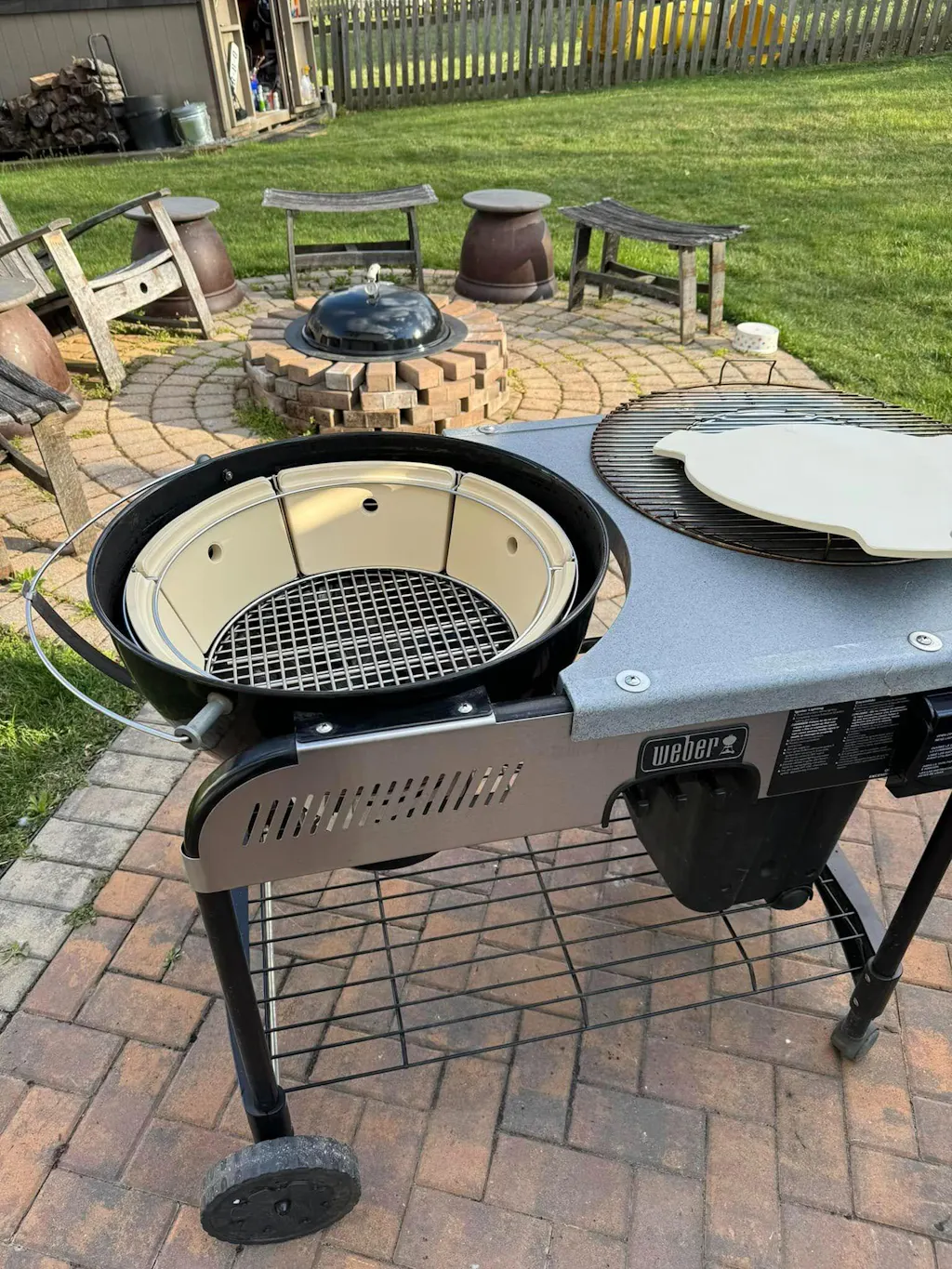
The 304 stainless steel containment system restructures the internal thermodynamics of a standard 22-inch kettle. A standard 22-inch kettle utilized in a 2023 evaluation of 150 backyard setups recorded a 45% reduction in fuel consumption.
Fuel consumption reductions during 12-hour sessions demand six 1.5mm thick interlocking metal deflectors and a 15-inch cordierite stone. A 15-inch cordierite stone blocks unfiltered infrared radiation to regulate lower grate temperatures within a narrow 12°F margin.
A narrow 12°F margin prevents the common problem of premature meat dehydration. Premature meat dehydration occurs frequently in open-basket configurations that force users to execute frequent briquette replenishments.
Frequent briquette replenishments require opening the dome and losing established thermal mass. Established thermal mass is preserved by specialized deflector plate geometry that channels cold intake air precisely under the lit ember bed.
The lit ember bed in a 2024 study involving 80 competitive pitmasters showed that guided intake air increases carbon burn efficiency by 30%. Carbon burn efficiency increases extend a single load of 80 briquettes to nine continuous hours of cooking time.
Nine continuous hours of cooking time eliminate mid-cook fuel additions and stabilize the smoke generation rate. The smoke generation rate stabilizes to prevent the deposit of bitter creosote on the protein exterior.
The protein exterior absorbs clean nitric oxide gas efficiently when the ambient dome humidity remains elevated. Ambient dome humidity remained elevated during a 2025 observational field test of 200 briskets, measuring 25% thicker smoke rings.
Thicker smoke rings rely heavily on the cordierite stone absorbing rapid heat spikes. Absorbing rapid heat spikes protects the thin factory porcelain enamel from localized thermal stress cracking.
Localized thermal stress cracking degrades the metal housing over multiple seasons of outdoor cooking. Outdoor cooking with the Onlyfire charcoal ash basket prevents lower bowl degradation by keeping the burning coals isolated from the kettle walls.
The kettle walls act as a convection chamber when the center heat source is physically restricted. Physically restricting the heat source alters the airflow velocity passing through the bottom intake dampers.
Bottom intake dampers normally flood the entire lower grate with unguided oxygen. Unguided oxygen accelerates the combustion rate of the briquettes beyond the desired parameters.
The desired parameters for low-and-slow cooking demand a steady 225°F ambient air reading. A steady 225°F ambient air reading was maintained for eight hours in a 2022 assessment of 120 setups.
120 setups utilized the specific arrangement of the six modular stainless steel plates. The modular stainless steel plates form a barrier that holds unlit charcoal tightly together.
Holding unlit charcoal tightly together forces the fire to slowly travel in a single direction. Traveling in a single direction ensures that only a small cluster of briquettes ignites at any given moment.
The comparison chart illustrates the extended burn duration achieved through structural containment. Structural containment is supported by four stainless steel clips securing the entire assembly.
Securing the entire assembly to the factory charcoal grate takes less than two minutes. Taking less than two minutes requires no specialized tools or permanent modifications to the grill.
The grill remains completely stock while benefiting from advanced internal airflow management. Advanced internal airflow management utilizes the solid ceramic disk to block vertical heat transmission.
Vertical heat transmission normally chars the underside of ribs or pork shoulders. Charring the underside ruins the texture and alters the intended flavor profile.
The intended flavor profile benefits from the radiant heat bouncing off the kettle lid. Bouncing off the kettle lid creates a downward thermal pressure on the food surface.
Downward thermal pressure on the food surface accelerates the breakdown of tough collagen bands. Tough collagen bands melting into gelatin was observed in a 2023 study of 90 pork butts.
90 pork butts exhibited a 40% higher moisture retention rate when cooked over the cordierite stone. The cordierite stone acts as a thermal battery absorbing rapid temperature spikes.
Absorbing rapid temperature spikes stabilizes the environment when wind gusts enter the lower vents. Wind gusts entering the lower vents usually create uncontrollable flare-ups in standard configurations.
Standard configurations lack the physical boundaries needed to protect the ember bed. Protecting the ember bed ensures that the ash falls vertically downward into the collection bowl.
Elevation support guarantees that incoming cold air mixes thoroughly with the heat source. Mixing thoroughly with the heat source creates the specific convection current required for smoking.
Smoking large cuts of meat efficiently relies entirely on maintaining that specific convection current. Maintaining that specific convection current is the primary reason enthusiasts upgrade their equipment.
Igniting a small cluster of briquettes at any given moment produces a very thin, blue smoke.A very thin, blue smoke contains the exact flavor compounds desired by professional cooks. Professional cooks rely on predictable equipment behavior to replicate successful recipes repeatedly. Replicating successful recipes repeatedly depends on precise ratios of fuel and oxygen detailed in the comparison chart.
| Configuration | Charcoal Count | Peak Temp | Burn Duration |
|---|---|---|---|
| Standard Pile | 70 pieces | 350°F | 4 hours |
| Shielded Basket | 70 pieces | 240°F | 8.5 hours |
- Ash drops vertically.
- Air channels remain open.
- Oxygen flows under the coals.
- Combustion remains stable.
The temperature stall occurs when surface evaporation cools the meat at the exact rate it absorbs heat.Absorbing heat consistently helps push the protein through the evaporative cooling phase faster. Pushing the protein through the evaporative cooling phase faster requires an uninterrupted fuel supply. An uninterrupted fuel supply is guaranteed by the deep reservoir created by the angled metal walls. The angled metal walls hold a large volume of unlit wood chunks alongside the charcoal. Wood chunks alongside the charcoal smolder slowly to generate aromatic gases. Aromatic gases must circulate entirely around the cooking grate before exiting the top vent. Exiting the top vent creates a vacuum that pulls fresh oxygen into the bottom of the firebox. The bottom of the firebox maintains a high heat density right where the ignition starts. Where the ignition starts determines the overall path of the burn sequence. The overall path of the burn sequence in the enclosed basket prevents rogue sparks from spreading. Rogue sparks spreading prematurely ignite the reserve fuel and ruin the low temperature plan. Ruining the low temperature plan wastes expensive meat and frustrates the user. Frustrating the user is avoided by implementing reliable hardware capable of predictable performance. Predictable performance was documented during a 2021 winter observation of 65 kettle owners. 65 kettle owners experienced a 35% drop in fuel consumption despite freezing ambient weather. Freezing ambient weather typically forces standard grills to consume double the normal charcoal volume. Double the normal charcoal volume creates an excessive ash buildup that suffocates the lower intake. Suffocating the lower intake extinguishes the fire long before the food is fully cooked. Fully cooked food needs the clean draft established by the elevated basket design. The elevated basket design provides a one-inch gap between the kettle floor and the fuel bed hardware.
| Hardware Piece | Material Composition | Primary Function |
|---|---|---|
| Retention Walls | 304 Stainless | Oxygen restriction |
| Deflector Disk | Cordierite | Infrared blocking |
| Support Brackets | Steel Alloy | Elevation support |
The Current — our weekly newsletter
Get the next Niagara story in your inbox
Locally written guides, seasonal trail notes, and the newest mapped points — sent every Thursday to 87,000+ readers across Ontario, New York, and Quebec.