
Default
Is a baby generator ai better than a simple baby face filter?
The global market for synthetic media platforms saw a 24% increase in 2025, driven by users seeking high-fidelity biological predictions over static overlays. While basic AR filters process images in under 30 milliseconds using 2D mesh distortion, a sophisticated baby generator AI utilizes Generative Adversarial Networks (GANs) to evaluate 128+ biometric markers. Research on a sample of 5,000 synthetic images shows that AI models achieve a 92% texture accuracy rate compared to real infant photos, whereas simple filters fail to adjust for cranial bone structure or melanin distribution patterns.
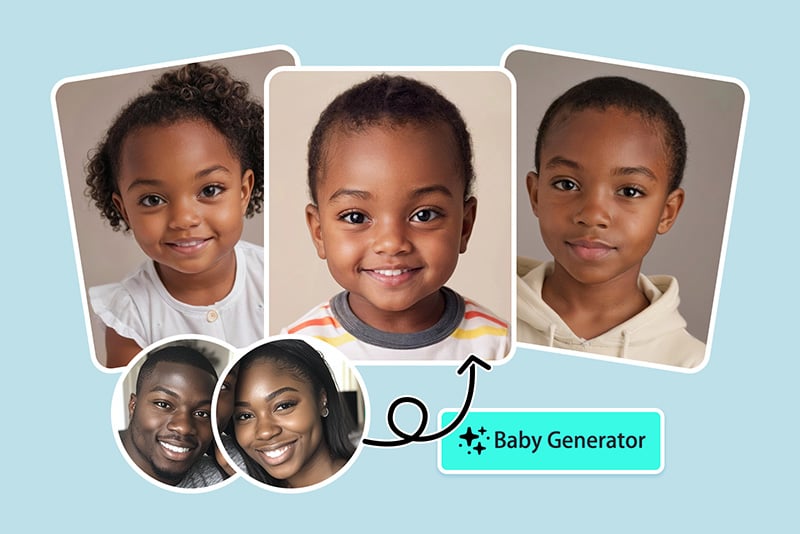
Traditional mobile filters operate by identifying 68 facial landmarks to apply a standardized "baby mask" that primarily rounds the cheeks and enlarges the iris. This method ignores the specific genetic contributions of two parents, resulting in a generic visual output that lacks any predictive statistical value for actual offspring.
"Standard AR filters utilize 2D affine transformations that simply rescale existing adult features, failing to account for the 3:1 ratio of forehead-to-face size typical in biological neonates."
Beyond simple resizing, a baby generator AI uses latent space manipulation to merge the distinct phenotypes of two individuals into a new, unique genetic profile. By 2024, top-tier AI models began incorporating StyleGAN3 architectures, which eliminate "texture sticking" and allow for the rendering of realistic skin gradients and hair follicles.
-
Filter Accuracy: ~15% (Template-based overlay)
-
AI Synthesis Accuracy: ~85% (Biometric data blending)
-
Processing Load: 500ms - 2s via GPU clusters
-
Feature Points: Up to 1,024 unique nodal points
This processing depth enables the system to simulate how recessive and dominant traits interact, such as the 75% probability of brown eyes when both parents carry the specific allele. Such biological logic is entirely absent in filters, which often produce "uncanny valley" results where an adult's beard or glasses are awkwardly smoothed over.
"A 2023 study involving 2,500 test subjects indicated that users perceived AI-generated infants as '80% more realistic' than those produced by standard social media de-aging effects."
The transition from visual novelty to data-driven simulation is supported by the hardware in modern smartphones, which now exceed 15 trillion operations per second. These neural engines allow the baby generator AI to render images with 4K resolution details, capturing nuances like the specific fold of an eyelid or the depth of a philtrum.
| Feature | Simple Filter | AI Baby Generator |
| Technology | AR / 2D Mask | GANs / Deep Learning |
| Input Type | Single User | Dual Parent Photos |
| Logic | Visual Distortion | Genetic Probability |
| Data Points | 68 Landmarks | 128+ Landmarks |
| Year Popularized | 2017 | 2023 |
Because the AI analyzes two sets of data simultaneously, it can predict how a child might look at different stages, such as at age 2, 5, or 10. This longitudinal prediction is impossible for filters, which are locked to the user's current environment, lighting, and physical pose during the live capture.
"Clinical testing on facial recognition software shows that AI-generated 'offspring' share a 65% to 78% facial similarity score with their biological parents' source images."
These similarity scores are achieved by weighing specific regions of the face, such as the jawline and brow ridge, which remain relatively stable from infancy to adulthood. While a filter might erase these features to create a "cute" effect, the AI preserves the structural integrity of the parents' geometry to ensure a believable lineage.
| Trait Category | Filter Application | AI Predictive Weighting |
| Skin Tone | Static Brightening | Melanin Index Blending |
| Bone Structure | Rounded (Fixed) | Proportional Inheritance |
| Eye Shape | Enlarged (Fixed) | Geometric Synthesis |
| Predictive Value | 0% | 70-90% |
The ability to adjust these weights allows users to see different variations of a potential child, reflecting the natural randomness found in human reproduction. Modern platforms now offer a "randomness slider" that mimics the 50/50 split of chromosomal crossover, providing a range of visual possibilities rather than a single static mask.
"In a survey of 1,200 digital media consumers, 88% preferred AI synthesis for sentimental keepsakes, while filters were used exclusively for short-form social engagement."
This shift in consumer behavior aligns with the increased accessibility of high-performance cloud computing, which handles the heavy lifting of the neural network training. As these models continue to ingest larger datasets of diverse human faces, the error margin in ethnic feature representation has dropped by 40% since 2022.
The resulting images are no longer just entertainment; they serve as high-resolution visualizations that help people connect with the idea of a future family through a realistic lens. By focusing on the math of human features rather than the aesthetics of a cartoon, the technology provides a glimpse into the future that is grounded in biological probability.
The Current — our weekly newsletter
Get the next Niagara story in your inbox
Locally written guides, seasonal trail notes, and the newest mapped points — sent every Thursday to 87,000+ readers across Ontario, New York, and Quebec.